We build worlds that remember their purpose.
Brandely Studio is a narrative-first development partner. We don't make mechanics that just function; we craft interactive systems where every loop, every pixel, and every haptic response serves an emotional core. Our process is built on a simple, stubborn belief: technical polish is the final layer of storytelling, not a separate discipline.
Our Decision Matrix
We operate within a defined set of constraints. Here’s what forces our choices—and what could change them.
Constraints & Boundaries
- •Platform limits dictate UI scale. Mobile touch targets are non-negotiable; desktop allows for finer precision.
- •Art style is a contract. Our UI must complement, never compete with, the established visual direction.
- •Budget vs. Scope. We advocate for a polished vertical slice over a sprawling, shallow prototype.
Trade-offs & Kill Criteria
- •Performance vs. Fidelity. If a visual effect drops below 60fps on target hardware, it gets simplified or cut.
- •Innovation vs. Familiarity. Novel control schemes require rigorous playtesting; if completion rate drops >15%, we revert.
- •What Changes Our Mind: User testing data showing a >20% drop in task completion, or a technical constraint that makes the design impossible.
The "Haptic Health" Decision
The Brief
A sci-fi shooter needed a health system that felt visceral without distracting overlays.
The Constraint
Controller vibration must remain precise; overuse causes player fatigue and masks critical feedback.
The Solution
We mapped damage intensity to subtle vibration patterns (e.g., a sharp *jolt* for a critical hit, a low *thrum* for shield recharge). Visual cue was a peripheral screen edge pulse, not a central meter.
Anatomy of a Brandely Game
We believe in transparent process. Below, a breakdown of our visual and systemic thinking from a recent stealth project.
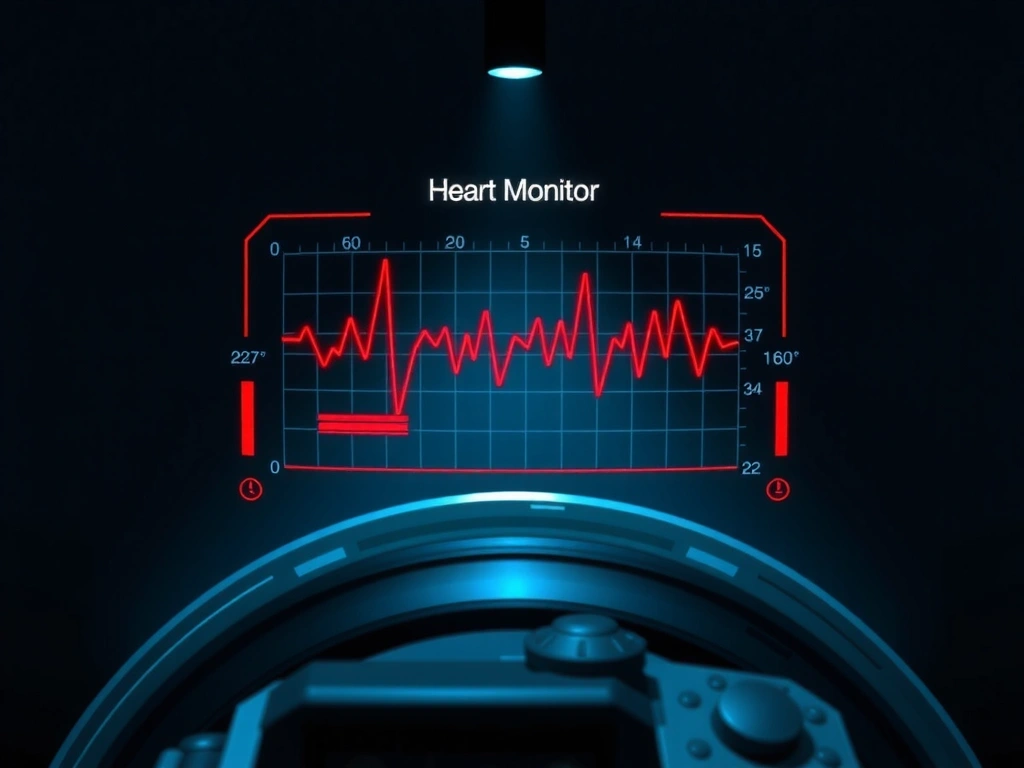
The Core Loop is a Rhythm
We diagram loops not as flowcharts, but as musical phrases. "Infiltrate (quiet tension) → Observe (planning) → Execute (release) → Escape (cadenza)." Every mechanic must fit a beat.
Diegetic UI Philosophy
In this world, the "scan" function isn't a button press; it's the character raising a wrist device. The UI is part of the animation, not an overlay. This reduces cognitive load.
The "Empty World" Trap
Open levels risk being sparse. Our fix: every 20 meters, place a "micro-interaction" (a log entry, a resource node, a visual breadcrumb). This maintains narrative momentum.
A Collective of Builder-Makers
"The best game design feels like a conversation with the player. We listen to their inputs, and the world responds with a language they understand."
— Ece Demir, Founder & Creative Director
Studio Ethos
We operate in a flat structure. A junior programmer's observation can reshape a core mechanic. The only hierarchy is that of ideas. Our weekly "Play & Critique" ritual—where we dissect other games—ensures we stay students of the craft.
Tools & Rituals
Our workspace is a hybrid of digital and physical. Large whiteboards are for system diagrams; our Unity workstations are tuned for performance. We still use index cards for narrative beat planning—analog anchors in a digital process.
Our Vernacular
Words we use daily. They're not just jargon; they're lenses for our work.
Emotional Fidelity
Not visual realism. It’s whether the *feeling* the game evokes matches its intended tone. A pixel-art horror game can have higher emotional fidelity than a photorealistic one if the audio design and pacing are right.
Systemic Clarity
How quickly can a player intuit cause-and-effect? We map systems on paper first, testing for "friction points" before a single line of code is written. Confusion is a bug in the design, not the implementation.
Diegetic UI
User interfaces that exist within the game world. A stamina bar is a diegetic element only if it's something the character could see (like a sweat meter on their helmet). We push for this where narrative permits.
Narrative Throughput
The rate at which story and lore are delivered through gameplay, not just cutscenes. We measure this in "pixels of storytelling"—the environmental details, audio cues, and item descriptions that build the world without stopping play.
Vertical Slice
A single, polished level or segment that demonstrates the full visual and gameplay scope. Our deliverable isn't a GDD; it's a playable slice that feels like the final game. It's the ultimate trust-builder.
Accessibility as Default
Not a post-launch patch. Color-blind modes, remappable controls, and audio cues are baked into the core loop. We design for the broadest reach from the first sketch. It’s a constraint that often sparks better solutions.
Ready to define your interactive narrative?
We partner with indie studios and developers who have a story to tell but need a world to contain it. Let's talk about your project.
Brandely Studio • Istiklal Caddesi No: 123, Beyoğlu, Istanbul, Turkey
+90 212 555 1234 • info@brandely.pro • Mon-Fri: 9:00-18:00 (TRT)